Serving Lewisville and the surrounding DFW area Call (469) 702-8764
Residential & Light Commercial

Polyaspartic Garage Floor Coating in Lewisville, TX

Polyaspartic has become the default choice for a lot of installers in North Texas, and it's not just marketing. It cures faster, holds color better under UV, and handles hot tire pickup better than standard epoxy. Here's what it actually is and when it's worth the extra cost.

Last reviewed July 2026.
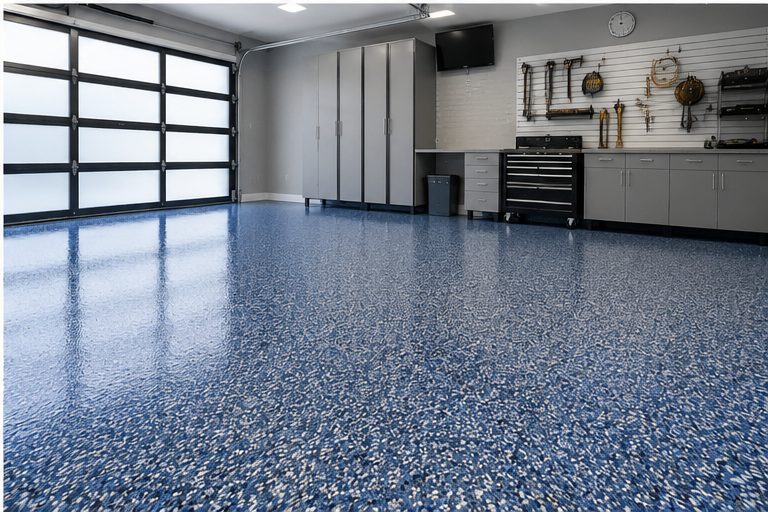
Empty space with a polished, seamless epoxy coated concrete floor
Representative photo. Polyaspartic systems hold this glossy finish without yellowing over time.

Quick Answer

Best For
Texas heat, fast turnaround, UV exposure at door opening
Lasts
10 to 20 years with proper concrete prep
Install Time
1 to 2 days
Vehicle Ready
24 to 72 hours depending on system
Maintenance
Sweep regularly, mop with pH-neutral cleaner
Typical Cost
$6 to $9 per square foot

Quick Answer

  • Polyaspartic is a type of polyurea coating known for fast cure and strong UV stability.
  • Some polyaspartic systems allow light foot traffic within 24 hours.
  • It resists yellowing and hot tire pickup better than standard epoxy in Texas heat.
  • It costs more upfront than epoxy but often works out to similar or better long-term value.
  • It has a wider workable temperature range, which matters for installs during Texas summers.

What Exactly Is Polyaspartic Coating?

Polyaspartic is a type of polyurea coating, a fast-curing polymer that was originally developed for industrial use, including things like bridge coatings and secondary containment. It got adapted for residential garage floors because of how well it performs under exactly the conditions that cause standard epoxy to struggle: UV exposure, temperature swings, and the weight and heat of a parked vehicle.

Most residential systems use polyaspartic as a topcoat over an epoxy or polyurea base coat, though some installers use it through the whole system. What actually matters for your floor is the full system, not just one layer's chemistry. See our garage floor epoxy page for how solid, flake, and metallic epoxy systems compare as a base layer.

How Is Polyaspartic Different From Epoxy?

FeatureStandard EpoxyPolyaspartic
Cure time to light traffic24 hoursAs little as 1 to 2 hours on some systems
Cure time to vehicle traffic3 to 5 days24 to 72 hours depending on system
UV stabilityCan yellow over timeHolds color well under direct sun
Hot tire pickup resistanceCan soften under hot tiresMore resistant to softening
Installation temperature rangeNarrower windowWider range, better for extreme heat or cold
Typical costLowerHigher, but often better long-term value

Why Do North Texas Installers Prefer Polyaspartic?

It Handles the Heat Better

Lewisville garages regularly see slab temperatures well above 100 degrees during summer. Polyaspartic's resistance to hot tire pickup matters directly here, since a car pulling in with tires that have absorbed heat from asphalt all day is a daily occurrence, not an edge case.

Faster Turnaround

Because some polyaspartic systems allow vehicle traffic within a day or two instead of the better part of a week, it's a meaningfully smaller disruption to daily life, especially for a household with one garage and no other covered parking.

Wider Install Window

Standard epoxy has a narrower humidity and temperature range for proper curing. Polyaspartic's wider tolerance means installers have more flexibility scheduling jobs through a Texas summer without worrying as much about cure quality.

Don't Judge a System by Cure Speed Alone

A lot of marketing leans hard on "1-day installation," and while polyaspartic's fast cure is real, cure speed says nothing about whether the concrete underneath was actually moisture tested or properly ground before the coating went down. A rushed 1-day job on unprepped concrete will fail on the same timeline as a rushed epoxy job, it will just look fine for a bit longer first. When comparing quotes, ask about the full system and the prep process, not just the number of days until you can park in the garage.

How Much Does Polyaspartic Coating Cost?

Polyaspartic systems typically run $6 to $9 per square foot installed in the Lewisville area, higher than standard epoxy due to material cost. For a two-car garage (400 to 500 square feet), that usually works out to $2,800 to $4,500. Given the longer expected lifespan and reduced risk of UV yellowing, many homeowners find the extra upfront cost worth it, especially for garages with significant sun exposure at the door opening.

Frequently Asked Questions

Is polyaspartic the same as polyurea?

They're closely related. Polyaspartic is a type of polyurea coating. Installers sometimes use the terms loosely to describe similar fast-curing systems, but the practical distinction that matters most is the full coating system used, not the exact chemical name.

Can I really park in the garage the next day?

Some polyaspartic systems allow light vehicle traffic within 24 hours, though full cure and heavy use is usually recommended after 48 to 72 hours. Your installer should confirm the specific cure schedule for the exact product used.

Does polyaspartic cost more than epoxy long-term?

The upfront material cost is higher, but polyaspartic's resistance to UV yellowing and hot tire pickup often means less touch-up or recoating over the life of the floor, which can offset some of the initial price difference.

Can polyaspartic be applied over an old epoxy floor?

Generally no, not without grinding the old coating off first. Like epoxy, polyaspartic needs a properly prepped, mechanically profiled surface to bond correctly.

Standards and References

  1. International Concrete Repair Institute, Guideline No. 310.2R-2013, Selecting and Specifying Concrete Surface Preparation for Sealers, Coatings, Polymer Overlays, and Concrete Repair
  2. ASTM International, ASTM D4060, Standard Test Method for Abrasion Resistance of Organic Coatings by the Taber Abraser
  3. ASTM International, ASTM D2794, Standard Test Method for Resistance of Organic Coatings to the Effects of Rapid Deformation (Impact)

Get a Free Polyaspartic Quote

Tell us about your space and we'll get back to you with pricing, no pressure, no obligation.

Request a Free Quote