Serving Lewisville and the surrounding DFW area Call (469) 702-8764
Commercial & Industrial

Commercial Epoxy Flooring in Lewisville, TX

A warehouse floor, a restaurant kitchen, and a retail showroom all need very different things from a coating. Here's what actually goes into commercial epoxy flooring done right, and how to think about downtime before you schedule the job.

Last reviewed July 2026.
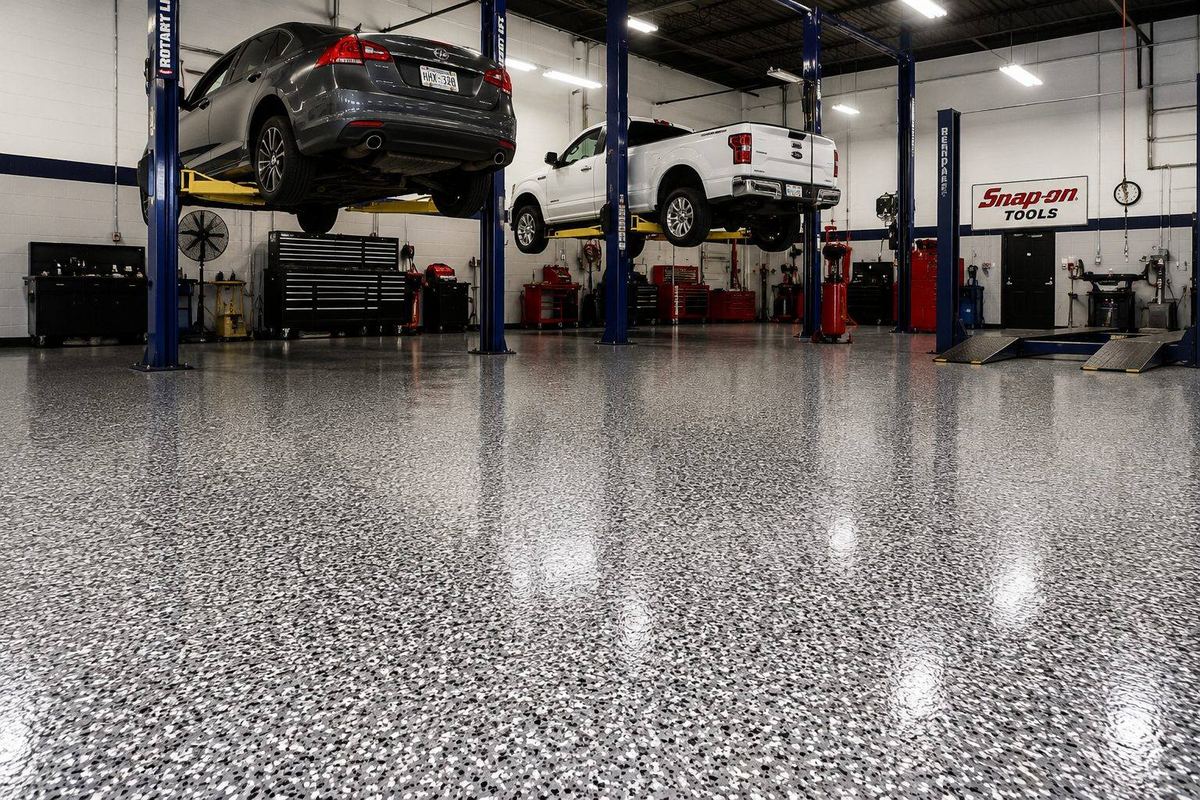
Empty industrial warehouse interior with a polished commercial concrete floor
Representative photo. Commercial coatings are built for heavy foot and equipment traffic.

Quick Answer

Best For
Warehouses, kitchens, retail and industrial spaces
Lasts
10 to 20 years depending on traffic and system
Install Time
Varies by size, often phased around business hours
Vehicle/Foot Ready
Varies by system, faster-curing options available
Maintenance
Depends on chemical exposure, typically low
Typical Cost
$4 to $12 per square foot

Quick Answer

  • Commercial jobs need the same moisture testing and grinding as residential, just at a bigger scale.
  • Chemical resistance, slip resistance, and load rating matter more than looks for most commercial spaces.
  • Downtime planning (nights, weekends, phased sections) is usually the biggest scheduling factor.
  • Cost typically runs $4 to $12 per square foot depending on size, system, and prep needed.
  • Larger slabs need more thorough moisture and PSI testing before a system is chosen.

What Kinds of Commercial Spaces Need Epoxy Flooring?

Warehouses & Distribution

Heavy forklift traffic, pallet racking loads, and constant wear mean these floors need high-build systems rated for point loads and abrasion, not just a decorative topcoat.

Restaurants & Commercial Kitchens

Grease, heat, and constant washdown require a chemical- and heat-resistant system, often with a textured or quartz-broadcast finish for slip resistance around cooking lines.

Retail & Showroom

Appearance matters more here. Metallic or decorative flake systems create a polished look while still holding up to foot traffic and rolling displays.

How Is Commercial Epoxy Different From a Residential Garage Job?

Chemical Resistance

Industrial and food service spaces are exposed to oils, solvents, cleaning chemicals, and sometimes acids that a residential garage never sees. The coating system needs to be matched to what's actually going to touch the floor, not a generic residential product applied at commercial scale.

Load Ratings and Point Loads

A parked car spreads its weight across four tires. A loaded pallet rack or forklift concentrates weight into much smaller contact points. Commercial systems need to be rated for the actual point loads they'll see, which affects both the coating thickness and the concrete prep underneath it.

Slip Resistance and Compliance

Commercial kitchens, entryways, and some retail spaces have slip-resistance requirements that go beyond what a residential floor needs. This usually means a textured topcoat or a broadcast media rather than a smooth, glossy finish, even if that changes the look somewhat.

Moisture Testing at Scale

The same moisture vapor problem that affects residential slabs applies here, just across a much larger area. Larger commercial slabs sometimes have inconsistent moisture readings across different sections, especially near loading docks or exterior walls, so testing needs to happen at multiple points, not just one spot.

How Do You Minimize Downtime for a Commercial Job?

Downtime is usually the biggest factor for a business owner, more than the coating choice itself. A few ways we plan around it:

What Does Commercial Epoxy Flooring Cost?

Commercial and industrial jobs typically run $4 to $12 per square foot depending on the system, the amount of prep work needed, and how much chemical or load resistance the space requires. Large-format warehouse jobs often come in toward the lower end per square foot due to scale, while specialized systems for kitchens or chemical-heavy environments can run higher. Every commercial quote should include a walkthrough and moisture testing before final pricing, since slab condition varies a lot more at commercial scale than in a typical residential garage.

Frequently Asked Questions

How long does a commercial epoxy floor last?

With proper prep and a system matched to the space's actual use, commercial epoxy floors typically last 10 to 20 years, though high-traffic industrial floors may need a topcoat refresh sooner depending on wear.

Can you coat around existing equipment and racking?

Yes, though it usually requires more careful phasing and detail work around fixed equipment, drains, and racking bases compared to an open residential garage.

Do commercial kitchens need a special coating system?

Yes. Commercial kitchens generally need a heat- and chemical-resistant system with slip-resistant texture, often a quartz or aggregate broadcast system rather than a smooth epoxy finish.

How much notice do you need to schedule a commercial job?

This depends on the size of the space and whether the work needs to happen during off-hours. Larger or phased jobs generally need more lead time to schedule around your business operations.

Standards and References

  1. International Concrete Repair Institute, Guideline No. 310.2R-2013, Selecting and Specifying Concrete Surface Preparation for Sealers, Coatings, Polymer Overlays, and Concrete Repair
  2. Association for Materials Protection and Performance, SSPC-SP13/NACE No. 6, Surface Preparation of Concrete
  3. ASTM International, ASTM F2170-19a, Standard Test Method for Determining Relative Humidity in Concrete Floor Slabs Using in situ Probes

Get a Free Commercial Flooring Quote

Tell us about your space and we'll get back to you with pricing, no pressure, no obligation.

Request a Free Quote